

Unity. Light. Love.

| Sunday, 30 August at 7:15 (2015) |
 |
| Om Shanti |
Shatavari: a herb for women. Shatavari is a plant that Ayurveda recommends exclusively for women. It is a wonderful remedy for the female reproductive system and is entirely plant-based. Quite literally, the herb is gathered and consumed without any further processing.
Shatavari translates from Sanskrit as "she who has a hundred husbands". It has a soothing nature and develops love and higher consciousness.
Shatavari is rich in special substances with hormone-like effects:
1. Rejuvenates the female reproductive system;
2. Increases breast-milk production;
3. Normalises the menstrual cycle;
4. Improves the ability of egg cells to be fertilised;
5. Addresses the problem of painful periods,
6. Relieves inflammation of the reproductive organs.
Shatavari is particularly good for women going through the menopause or who have had a hysterectomy, since it contains many female sex hormones. Shatavari nourishes the egg cells and increases their ability to be fertilised, which is very helpful for women who cannot conceive.
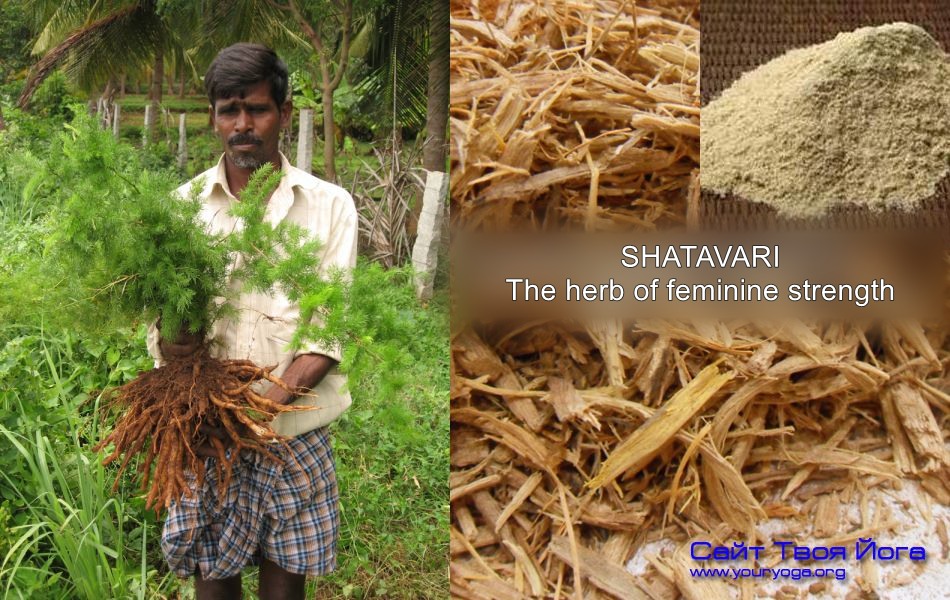
It can also be brewed as a tea, with honey added to taste. Take it before meals.
And a simple option: swallow the powder with water.
Besides its wonderful effect on the entire female reproductive system and everything associated with it (hormones, etc.), shatavari also has a beneficial effect on one's mental state and the functioning of the heart, calming it and bringing its activity into harmony. Shatavari is particularly beneficial for the mucous membranes of all the organs (lungs, stomach, kidneys, etc.). It cleanses the liver and blood.
Nowadays, thanks to the Internet, this plant is easy to find. It is available to anyone. I hope those who want it will have no trouble finding it. Shatavari also has another, "scientific" name: Asparagus racemosus.
Shatavari is considered an elixir of youth for the female body and is used as an all-purpose remedy for improving women's health.
The root of this truly unique plant is an ingredient in more than 100 Ayurvedic preparations, which in itself says much about its importance.
© Author: Sergey Veretennikov (Om Shanti)
| « Read Sergey's Entire Blog |


