

Unity. Light. Love.
Practice
Asanas for the Seven Main Chakras


Some yoga asanas focus specifically on opening the chakras. You will agree that simply adopting a posture and remaining in it for a couple of minutes is not difficult; it is even easier than spending hours chanting mantras or performing special meditations. Some people will therefore prefer this method. In any case, you can combine it with other methods to work more deeply with the chakras.
As I have said, all you need to do is adopt the asana for the corresponding chakra and remain in it for a comfortable length of time. Throughout, be sure to concentrate on the chakra associated with that posture. Essentially, that is all.
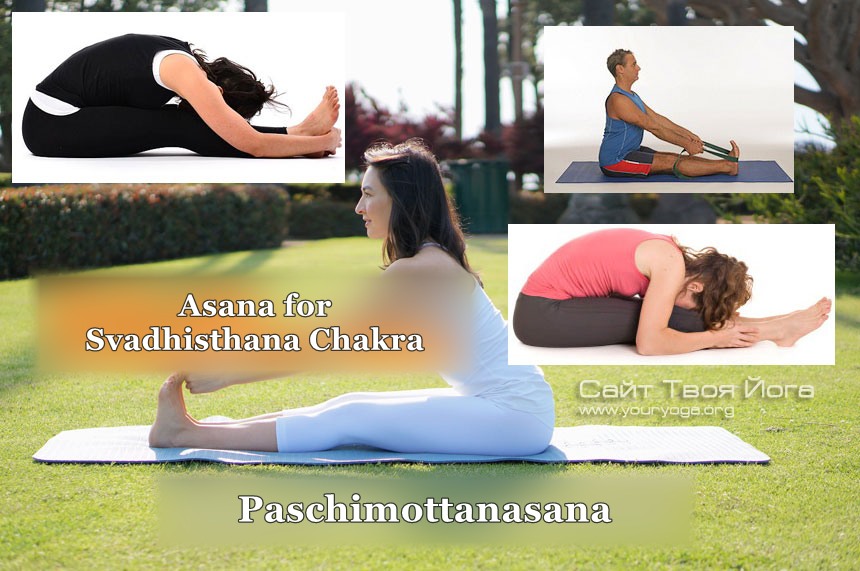
If you cannot perform an asana, hold it as well as you can. The pictures below include variations of some postures. Take Paschimottanasana for svadhisthana, for example. Not everyone can immediately sit down and reach their toes. At first, you can reach towards your knees. You can hold a strap as an extension of your arms. Do what you can, working towards the position shown in the picture.
If you already practise hatha yoga and know your own variation of an asana, you can continue using it. Every asana has many variations, all good in their own way and all valid. Spinal twisting is one example: use your own variation if you wish. The pictures are a guide, as well as a clear visual aid for someone who has never practised asanas and intends to start today or tomorrow. The idea is: look, remember, begin.
I have already given so much information about the chakras that I assume there is little point explaining the importance of opening them again. You know this; what is really needed is to begin practising. Even if you know nothing about chakras, simply start doing these exercises. They require no knowledge of chakras. You will begin to benefit whether you have that knowledge or not.
I recommend performing all these asanas, so that you work with every chakra. You can do them in this order, beginning with muladhara and ending with sahasrara. If you wish, however, you can be selective. If only one particular chakra interests you, simply perform its asana. That is also possible.
[ open full size ]
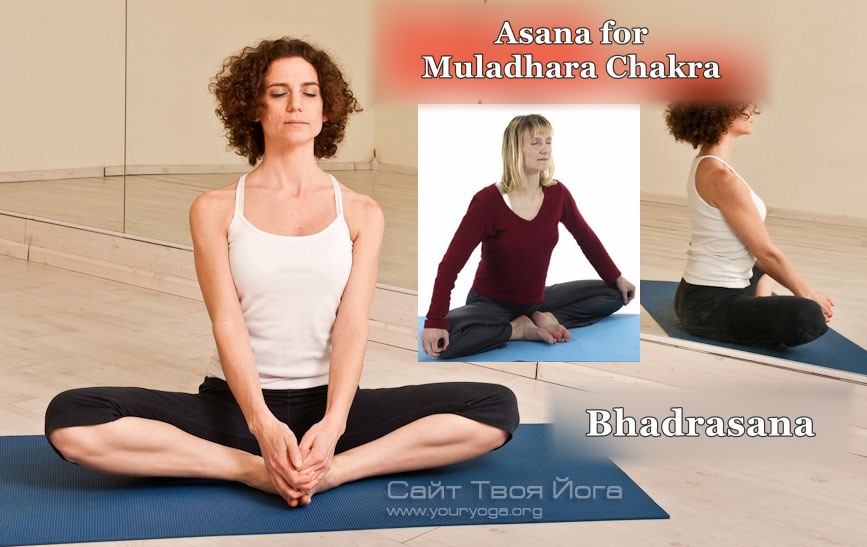
This is also called the butterfly pose. Some of you may have done it as children. Children enjoy doing it, spontaneously turning it into a game. Your knees may not reach the floor straight away. Simply work towards this, or sit on a small raised support such as a little cushion. Keep the soles together and close to your body.
The Hatha Yoga Pradipika, the principal scripture for yogis who practise asanas, names Bhadrasana as one of the four most important postures. It says: "Place the lower legs on either side of the perineum, the right on the right and the left on the left. Then bend the thighs, holding them with the hands and pressing them towards the ground. This is Bhadrasana, which destroys all ailments." The name itself means a posture that brings benefit.
[ open full size ]
This asana has many variations: holding the big toes, reaching the hands beyond the feet and so on. They all share one intention: sit with your legs extended and bend forwards towards them as far as possible. Do not force anything or push through pain. Bend forwards only as far as feels comfortable. If you can only reach your knees, let that be enough. With regular practice, you will progress towards touching your forehead to your knees, literally laying the front of your torso along your legs, and even reaching beyond your feet to clasp your hands together. Bend forwards on an exhalation.
[ open full size ]
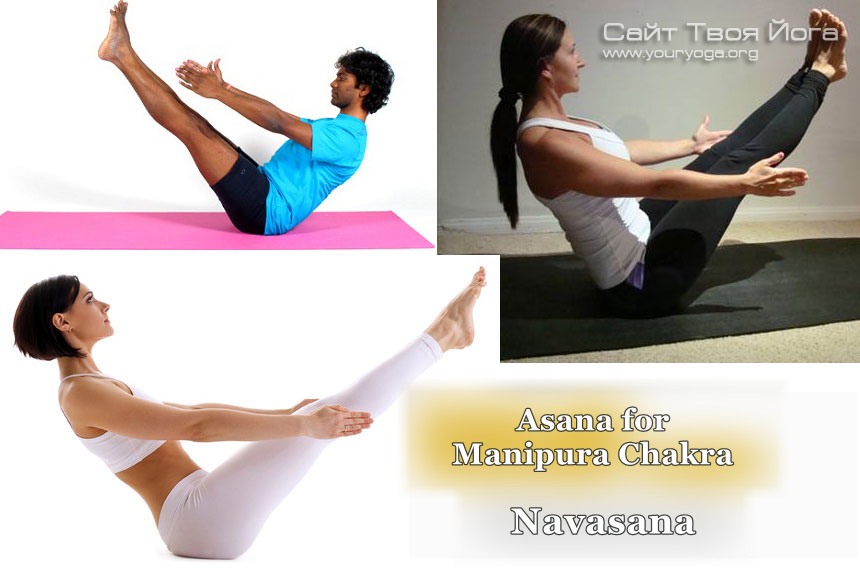
I have described this asana and its chakra in detail in the practice "Manipura: The Golden City". Essentially, it is the boat pose we were often made to do in school physical education lessons.
[ open full size ]
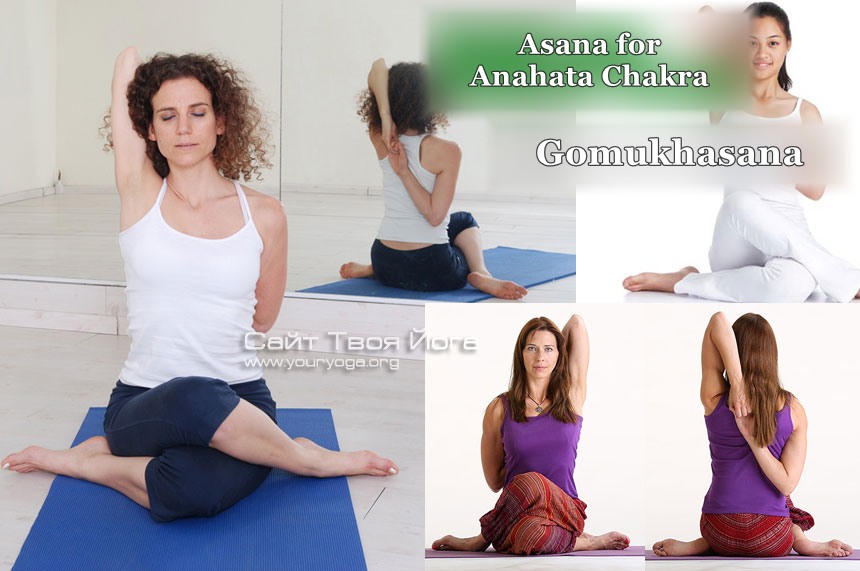
Cross your legs as shown in the picture. Bring your hands behind your back and clasp them together. If you cannot reach, hold a strap in the upper hand to connect the hands; gradually you will manage without it. Then reverse the arms and legs, lowering those that were on top and raising the other arm and leg.
The name means cow pose. In Vedic civilisation, a cow is far more than an animal: it is a being that brings the highest benefit to everyone.
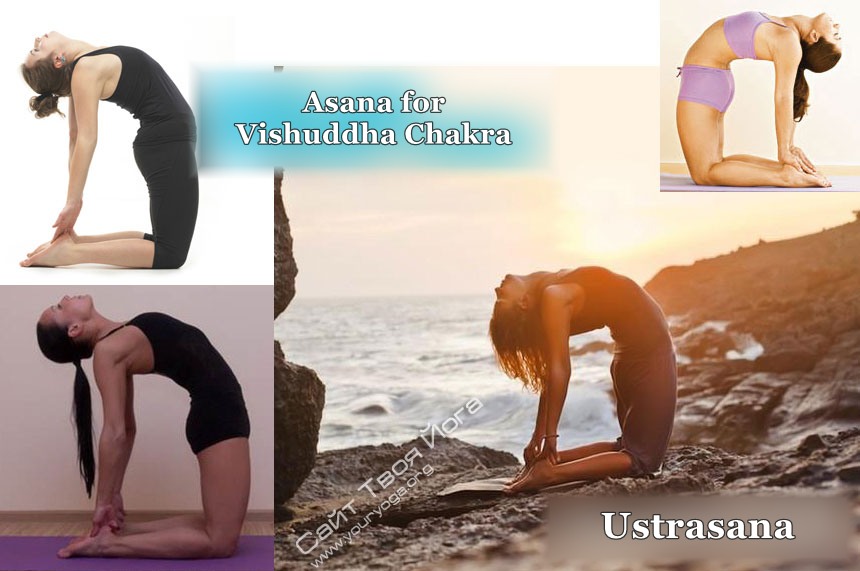
[ open full size ]
I have described this asana and its chakra, vishuddha, fully in the practice "Vishuddha: The Gates of Heaven".
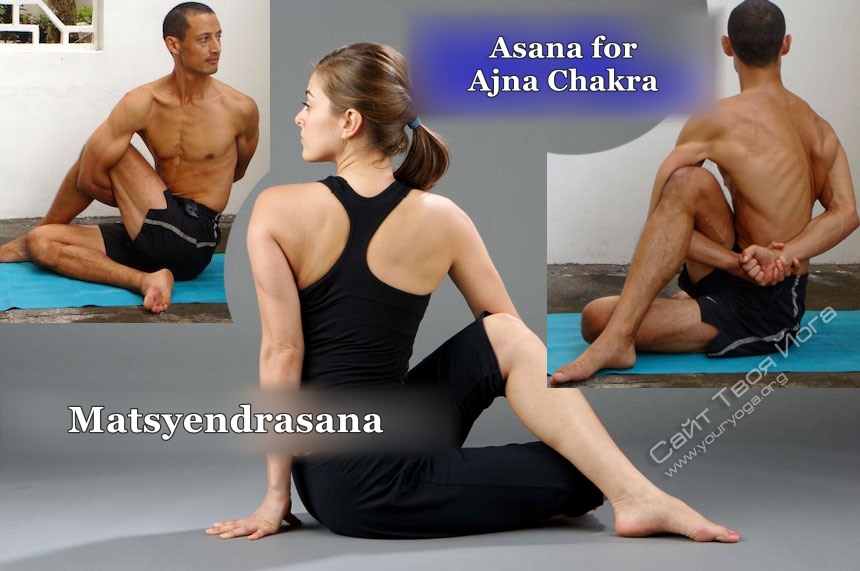
[ open full size ]
I have described this asana here. It too has many variations. The main aim is to twist the spine and look behind you. If you cannot manage the variation with a hand beneath the knee, do not worry. You can perform the simple version, turning backwards as shown in the picture above. Practise this asana on both sides.
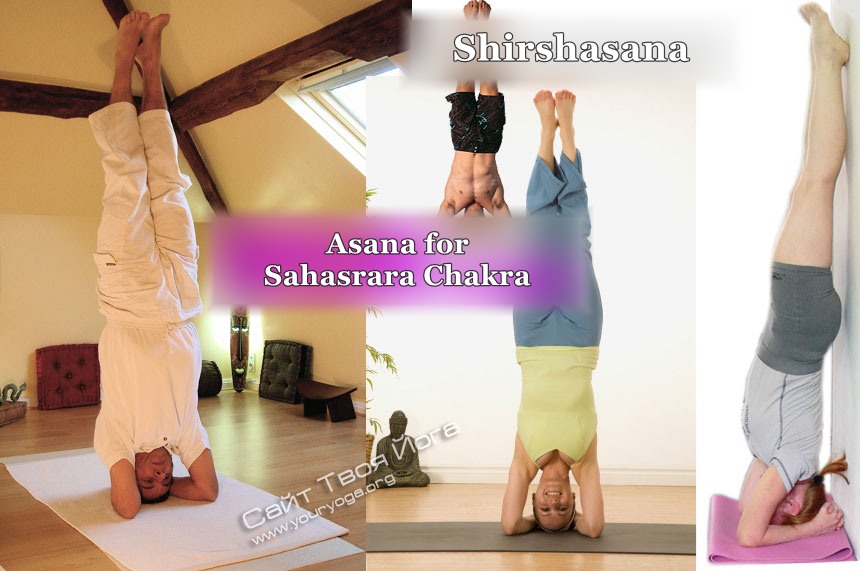
[ open full size ]
This is truly the queen of asanas. I chose the word "queen" deliberately, because this posture works with the chakra often called the crown chakra. Kings and queens wear crowns. Indeed, the custom of wearing crowns is no accident: it is directly connected with sahasrara. We all have such crowns, and this asana strengthens yours further.
I must warn you straight away: perform this asana very carefully. For the first week, I would advise practising only the variation in which you kneel, lower your head, place the crown on the floor and hold your hands behind your head. Remain like this for 1–2 minutes, rather like someone praying. Some people may be better off not progressing any further until they have brought their health into good condition.
If your health is reasonably good and you have no restrictions concerning blood pressure, blood vessels, your heart and so on, you can progress to holding the inverted posture for a few seconds, for example beside a wall, and then gradually increase the time. Do not hurry. I am serious: this is not a posture to play around with. Children may do it easily as a game, but if you have never done anything similar, have not exercised and are over forty, approach it very carefully.
© Author: Sergey Veretennikov (Om Shanti)
Practice given on 2 June 2015.


