

Unity. Light. Love.
Practice
The Protective Swastika


 The swastika is a symbol of the Sun, the central Sun. It consists of four parts: the four seasons and four major cosmic events — the summer and winter solstices and the two equinoxes. Naturally, this is only part of its meaning, the part closest to our physical, visible reality.
That is why we see its four equal parts. This is a cosmic symbol carrying immensely powerful cosmic vibrations. It existed long before the Earth formed, and all the other “important” symbols, signs and letters created by people during their time on Earth pale before its power.
The main question I am often asked concerns the difference between the right-facing and left-facing forms. I have answered this more than once in other articles and practices, but I will try approaching it from another angle, which may make it clearer. Without going into detail, to make it easier to understand, I will say that there is no right-facing or left-facing swastika. There is only one swastika — simply a swastika. You can look at it from the front or the back, or, if you prefer, from above or below. The swastika itself does not change. But for the person using it or viewing it from different angles, this matters, because it takes on different properties and offers different energies and possibilities.
In Buddhism the swastika is called the Seal of the Sun. It can often be seen over the heart on statues of the Buddha. The swastika appears almost everywhere, among all peoples. This suggests that in the very distant past we were all one people with a single, highly developed spiritual culture.
One important function of the swastika is protection. In India, large images of this ancient symbol are painted on temples and homes. It is also drawn on objects people wish to protect, such as cars; inside cars there may be swastika-shaped amulets or small drawings of it. I mention cars for a reason. You probably know what traffic in India is like. No word can really describe it. Only Indians themselves understand what takes the place of road traffic there. Cars, mopeds, rickshaws, bicycles and pedestrians all mingle in one incomprehensible stream: complete chaos. Yet, astonishingly, the accident rate is very low. If something similar happened on European streets, there could be serious problems. You can therefore use this in your own car, since so many people here are involved in traffic accidents of various kinds. The swastika is drawn everywhere: on a baby's head for protection from the evil eye and evil spirits, on a bride's hands and feet at her wedding, and on so many other occasions that it is impossible to list them all.
It is very beneficial to have even a small poster of a swastika at home. Here I mean the protective swastika. You can draw one yourself, for example on a sheet of drawing paper, and this will be very auspicious. Red paint is used for this purpose. I have also discussed the protective swastika in my practices, for example here. You can also read about the model of the Universe here.
What I mean is that even if you do not use the practice described below, simply using a red swastika will also be very beneficial.I have explained the essence of the practice in the video I made below. Watch it.
Simply inscribe the person you wish to protect within the swastika: write their first name, and their surname if you wish. This may be yourself, a relative or someone you know. You wind the letters of the name around the swastika, as the video clearly shows. The picture below gives an example for someone named “Sergey”.
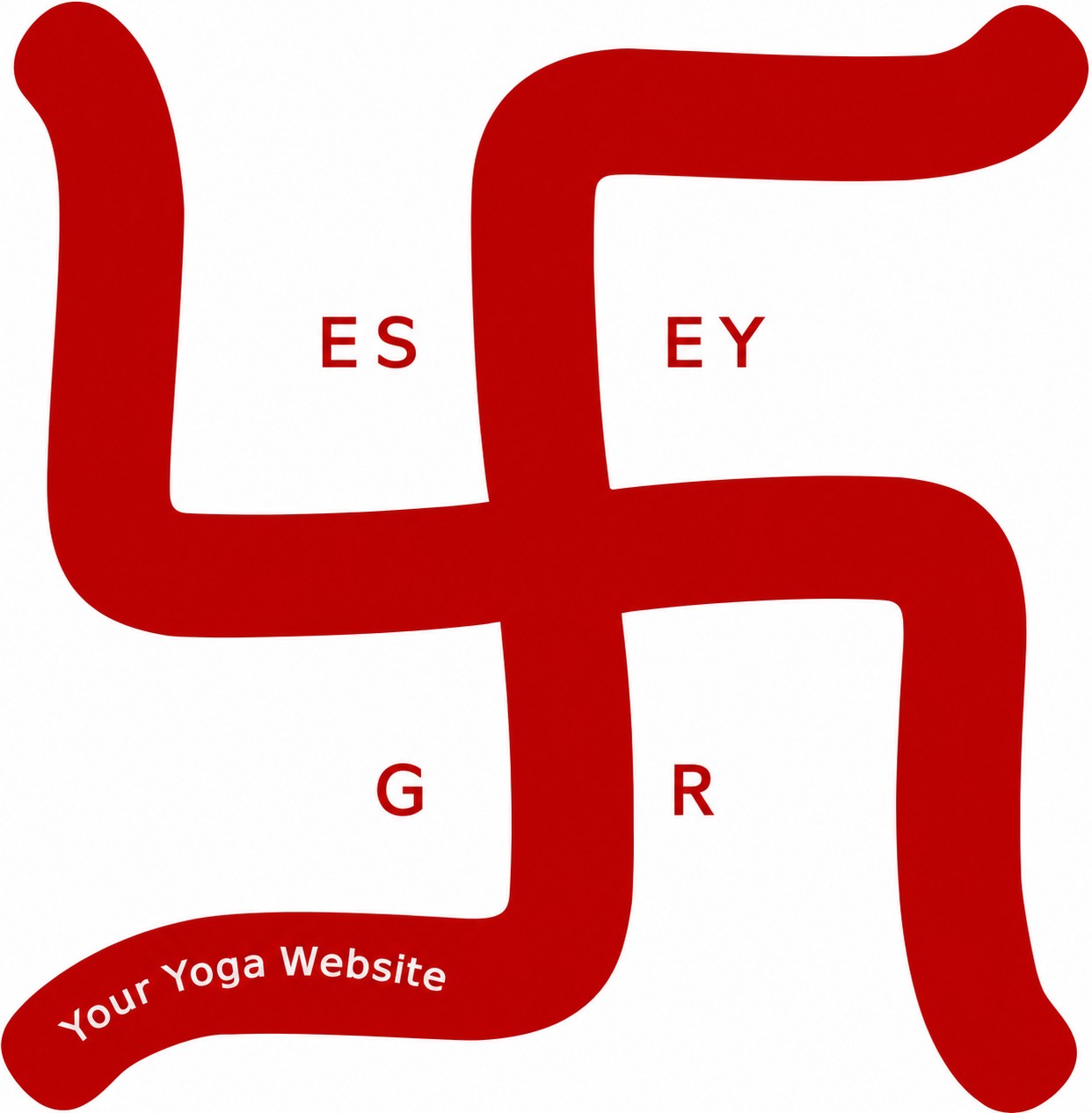
Everything need not be perfectly even. Just remember that each letter follows the previous one, and you can arrange them as you wish within the four spaces formed by the swastika. This may be useful if your surname is long or if you also wish to write your patronymic. Remember the rule: begin filling the spaces from the inner corners at the central cross.
One of the most important conditions is to think very positively about the person as you write their name. If you are doing it for yourself, think about yourself. You can hang this swastika in your room. If you are making it to protect your child, you can hang it in their room. This is not essential, however: you can simply put it somewhere out of sight and out of the way, perhaps inside an album or a book. Still, its effect is greatest when it is displayed openly. In a time of danger, illness and so on, it is therefore better to make one and hang it in your home.
Consider another example: a relative calls from another city or country and has problems, perhaps with their health. You cannot give them such a swastika, and there is no time to explain; perhaps you also know that the subject would be too difficult for them to understand. You can help in this way: make a swastika with their first name and surname and place their photograph on it. The swastika can simply lie on a table, with the photograph face down on it. If you have no photograph, you can do without one.
You can also make a lasting protective amulet. For example, draw this swastika for yourself on a small piece of drawing paper and cover it with clear adhesive tape. You will have a durable amulet to carry in a handbag, wallet or pocket, or even wear around your neck. You could also commission a jeweller to make one from silver or another precious material, or carve one yourself. In that case, once it has been made, you will need to bring it to life. Hold it in your hands and touch each letter with a finger, such as your index finger, as though writing the letters. Follow the practice in every other respect, thinking about yourself if it is for you, or about the person for whom it is intended.
© Author: Sergey Veretennikov (Om Shanti)
(Practice given on 12 January 2015.)


